
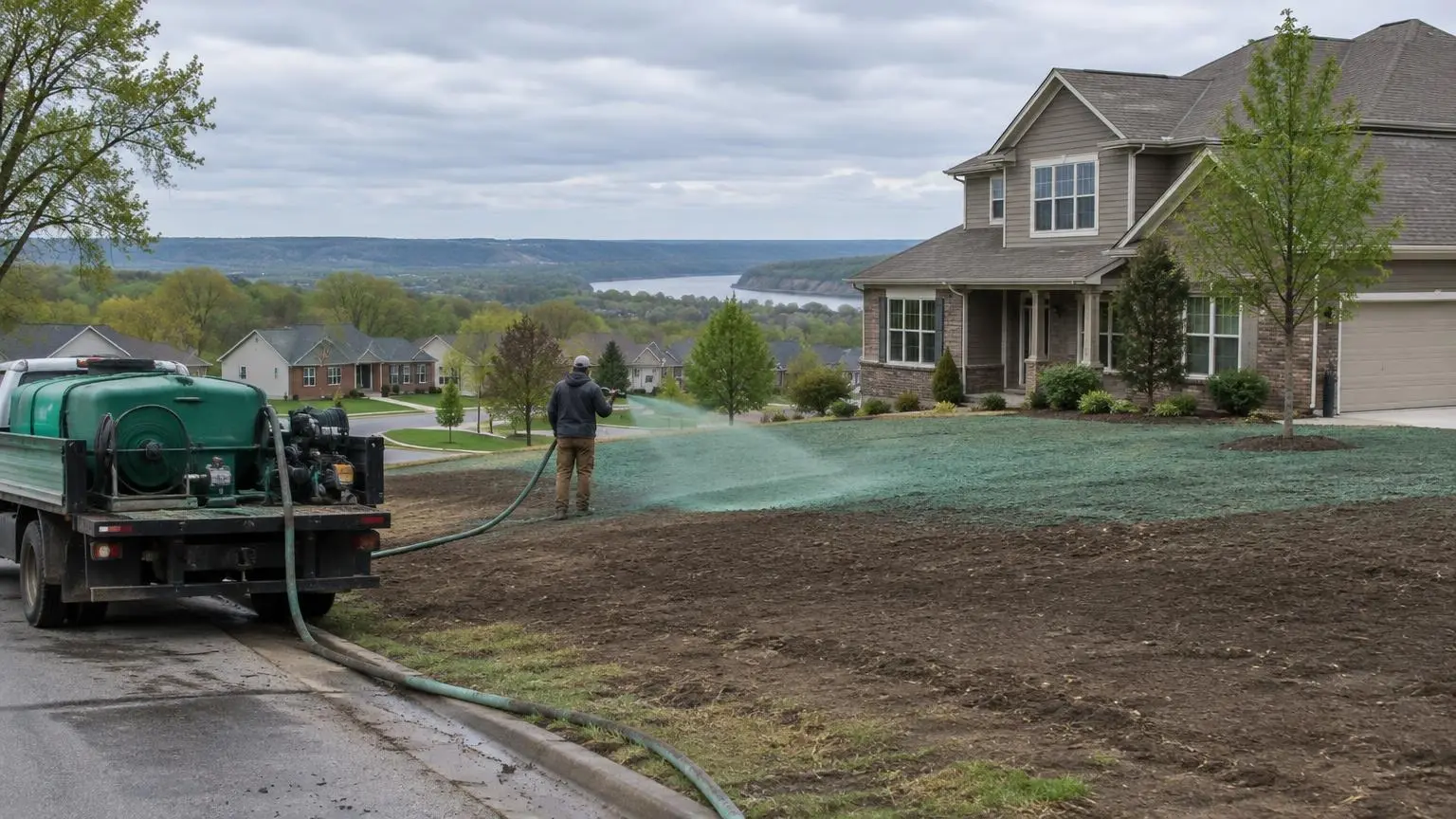
Built on forested ground
Hydroseeding in Gladstone, MO
Before the streets, this was hardwood forest. The trees that remain still decide where grass will grow.
- We walk your ground for free and quote it in writing
- Seed mixes chosen for Missouri's transition-zone weather
- Grading, seeding and erosion control from one crew
Growing Grass Where the Forest Was
Hydroseeding in Gladstone has to account for trees. The city was built on mesic forest land, and a remnant of that forest survives as the Maple Woods Natural Area, a National Natural Landmark. Many yards still have big hardwoods, and shade is the most common reason a Gladstone lawn thins out.
Matching seed to light
A full-sun fescue blend will struggle under a dense canopy. Before we quote, we look at how many hours of direct sun each part of the yard gets. Sunny areas get a standard tall fescue mix; shadier areas get a blend with more shade tolerance. In deep shade, we will tell you honestly that a mulch bed may work better than grass.
Roots and soil
Tree roots compete hard for water. Hydroseed slurry keeps seed moist at the surface, which helps, but young grass under trees still needs regular watering through its first summer. We avoid heavy grading near trunks so we do not damage roots.
A compact city
Gladstone covers only about 8 square miles and has almost no water area. It incorporated by popular vote in November 1952, specifically to avoid being annexed by Kansas City. The city grew fast in that era, going from 14,502 residents in 1960 to 23,422 in 1970.
What that means for lawns
With most homes now fifty to seventy years old, our work here is mostly renovation, overseeding and repair after sewer or water line digs. Leaf drop each fall also smothers grass if left on the lawn, so we time seeding to give new turf a head start before leaves come down, and suggest clearing them promptly.
Commercial strips
Along North Oak Trafficway, commercial redevelopment sometimes needs silt fence and quick seeding of disturbed ground.
Get a free estimate or call (816) 666-9542.
Gladstone's Land Story
- Forest origins. Gladstone is built on mesic forested land, a remnant of which is preserved as the Maple Woods Natural Area.
- Incorporation. Residents voted to incorporate in November 1952 to avoid annexation by Kansas City.
- 1960s growth. The city grew from 14,502 people in 1960 to 23,422 in 1970.
- Small footprint. Gladstone covers about 8.08 square miles with almost no surface water.
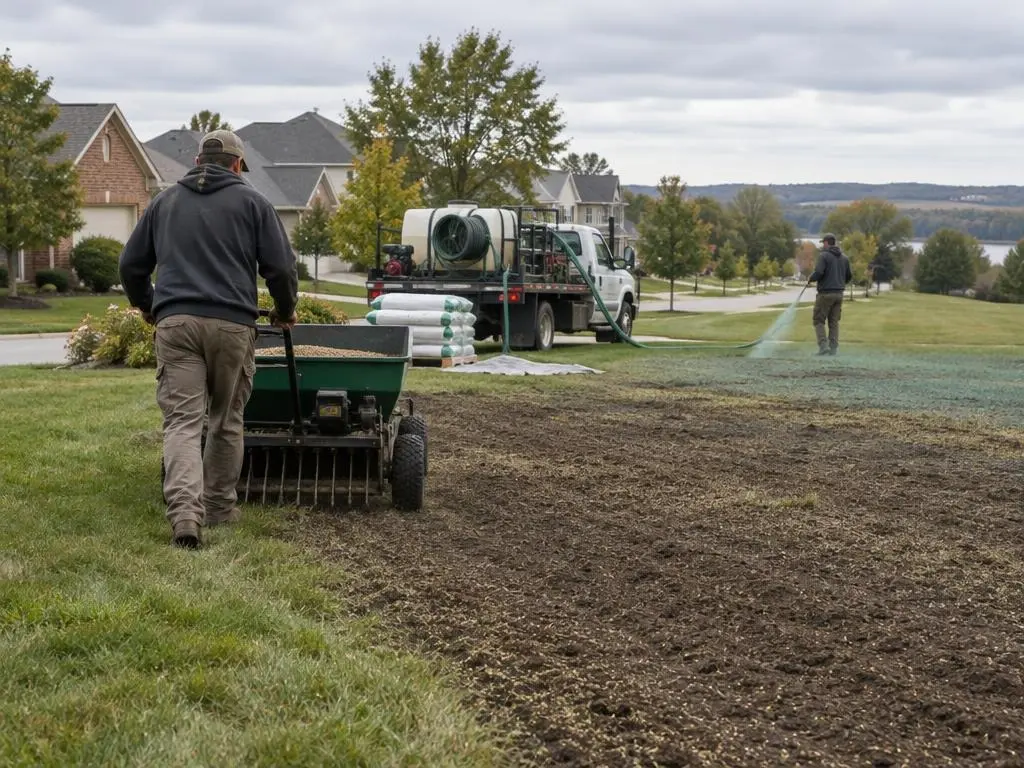
Gladstone Questions
Will grass grow under the big oaks in my Gladstone yard?
Partly shaded areas can hold a shade-tolerant blend. Very dense shade often does better as a mulch bed.
When should I seed if I have lots of trees?
Early September usually works, giving grass a few weeks of growth before heavy leaf drop.
Can you regrade near tree roots?
We keep grading light near trunks and add only a thin layer of soil so we do not damage roots.
Do you repair yards after sewer line replacement?
Yes. We grade the trench, add topsoil and seed it to match.
Free Estimates in Gladstone, MO
Free estimates for Gladstone shade lawns and renovations.
Hydroseeding Near Gladstone
- Hydroseeding in Kansas City, MO
- Hydroseeding in Overland Park, KS
- Hydroseeding in Olathe, KS
- Hydroseeding in Lee's Summit, MO
- Hydroseeding in Kansas City, KS
- Hydroseeding in Independence, MO
- Hydroseeding in Blue Springs, MO
- Hydroseeding in Shawnee, KS
- Hydroseeding in Lenexa, KS
- Hydroseeding in Liberty, MO
- Hydroseeding in Raymore, MO
- Hydroseeding in Gardner, KS
- Hydroseeding in Leawood, KS
- Hydroseeding in Belton, MO
- Hydroseeding in Grandview, MO
- Hydroseeding in Parkville, MO
- Hydroseeding in Smithville, MO
- Hydroseeding in Kearney, MO
- Hydroseeding in Grain Valley, MO
- Hydroseeding in Platte City, MO
- Hydroseeding in Riverside, MO
- Hydroseeding in Prairie Village, KS
- Hydroseeding in Bonner Springs, KS