
Little Platte River town
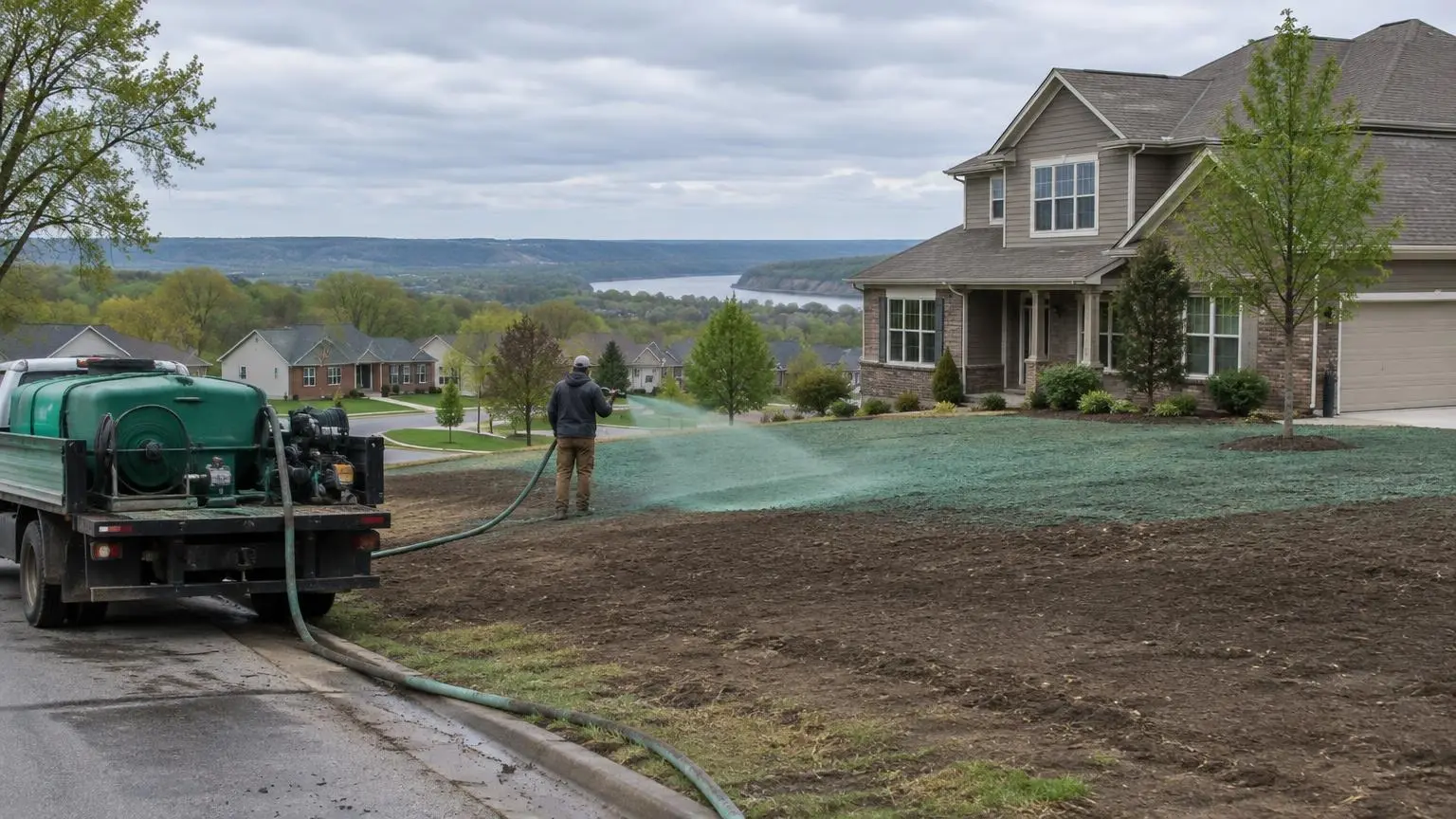
Hydroseeding in Smithville, MO
A town that started at a mill on the river now borders one of the metro's largest lakes.
- We walk your ground for free and quote it in writing
- Seed mixes chosen for Missouri's transition-zone weather
- Grading, seeding and erosion control from one crew
New Lawns Upstream of a Flood Control Lake
Hydroseeding in Smithville means working just upstream of a major reservoir. The Little Platte River is dammed just east of the city, forming Smithville Lake, a 7,190-acre Army Corps of Engineers reservoir with about 175 miles of shoreline. The dam was finished in 1977, and the lake was built mainly for flood control.
Why sediment matters here
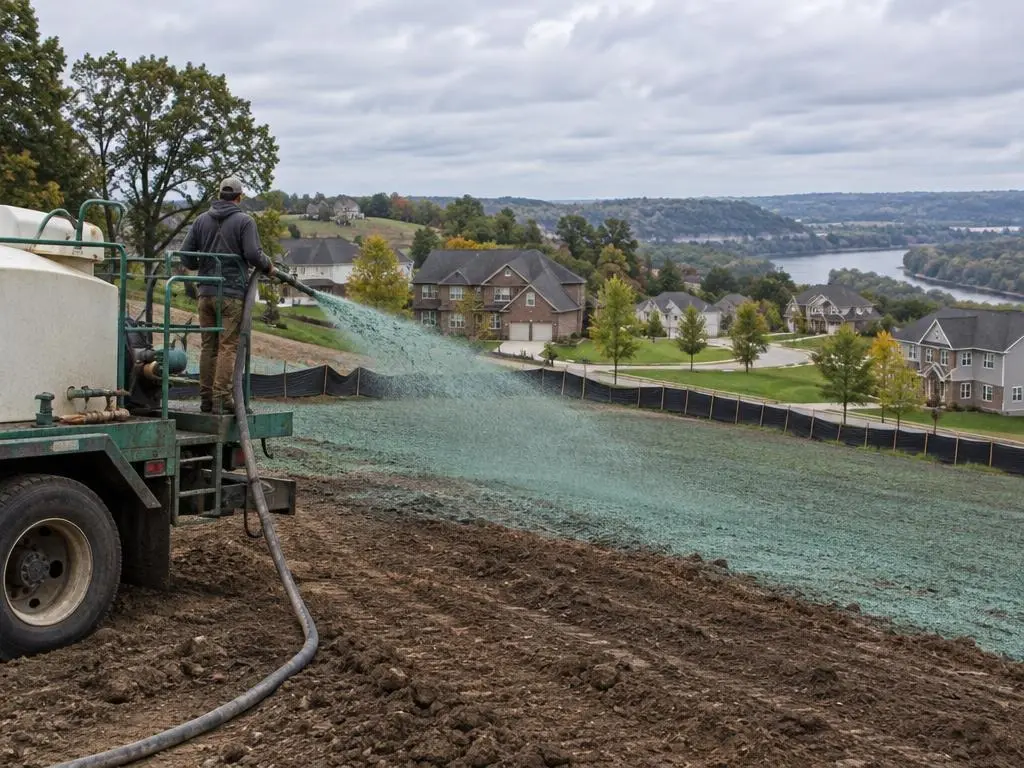
Soil that leaves a construction lot near the river or one of its feeder creeks ends up in the lake. Over time, sediment takes up storage space a flood control reservoir needs. Keeping silt fence below grading, protecting drainage paths and seeding promptly all help keep that soil on land.
A town that keeps growing
Smithville went from 2,525 residents in 1990 to 10,406 in 2020, and housing units nearly doubled between 2000 and 2020. Much of that is new single-family housing, which means fresh lots that need topsoil, fine grading and a new lawn.
Weather swings
The local climate record shows how extreme it can get: a high of 107 degrees on August 9, 1988 and a low of minus 26 degrees, reached in both December 1989 and February 2021. Average annual precipitation is about 40 inches. Fall seeding gives grass time to harden off before winter, and a good root system before the next summer.
Mill town history
Humphrey Smith settled the site in 1822, and it was first called Smith's Mill. The town sits along the Little Platte and extends from western Clay County into Platte County, so yards range from river-valley lots to upland ground.
Lake-area properties
Homes near the lake's parks and coves often have long slopes toward the water. We seed the lawn and use blankets on the bank.
Get a free estimate or call (816) 666-9542.
Smithville Lake and Town Facts
- Smithville Lake. The 7,190-acre reservoir has about 175 miles of shoreline and was built primarily for flood control.
- Dammed river. The Little Platte River is dammed just east of the city; the dam was finished in 1977.
- Temperature extremes. Records range from 107 degrees in August 1988 to minus 26 degrees in 1989 and 2021.
- Growth. The population rose from 2,525 in 1990 to 10,406 in 2020.
Smithville Questions
Does runoff from my lot really affect Smithville Lake?
Soil from lots near the river and its creeks drains toward the lake. Silt fence and quick seeding keep it on your property.
We have a long slope down toward a cove. What do you suggest?
Hydroseed the lawn and stake erosion control blankets on the steepest part of the bank.
Will a new lawn survive a Smithville winter?
Grass seeded by mid-September usually roots well enough to come through winter.
Do you handle grading and topsoil for new homes?
Yes. Our crew grades, spreads topsoil and then we seed.
Free Estimates in Smithville, MO
Free estimates for Smithville homes and lake-area lots.
Hydroseeding Near Smithville
- Hydroseeding in Kansas City, MO
- Hydroseeding in Overland Park, KS
- Hydroseeding in Olathe, KS
- Hydroseeding in Lee's Summit, MO
- Hydroseeding in Kansas City, KS
- Hydroseeding in Independence, MO
- Hydroseeding in Blue Springs, MO
- Hydroseeding in Shawnee, KS
- Hydroseeding in Lenexa, KS
- Hydroseeding in Liberty, MO
- Hydroseeding in Raymore, MO
- Hydroseeding in Gardner, KS
- Hydroseeding in Leawood, KS
- Hydroseeding in Belton, MO
- Hydroseeding in Grandview, MO
- Hydroseeding in Gladstone, MO
- Hydroseeding in Parkville, MO
- Hydroseeding in Kearney, MO
- Hydroseeding in Grain Valley, MO
- Hydroseeding in Platte City, MO
- Hydroseeding in Riverside, MO
- Hydroseeding in Prairie Village, KS
- Hydroseeding in Bonner Springs, KS