
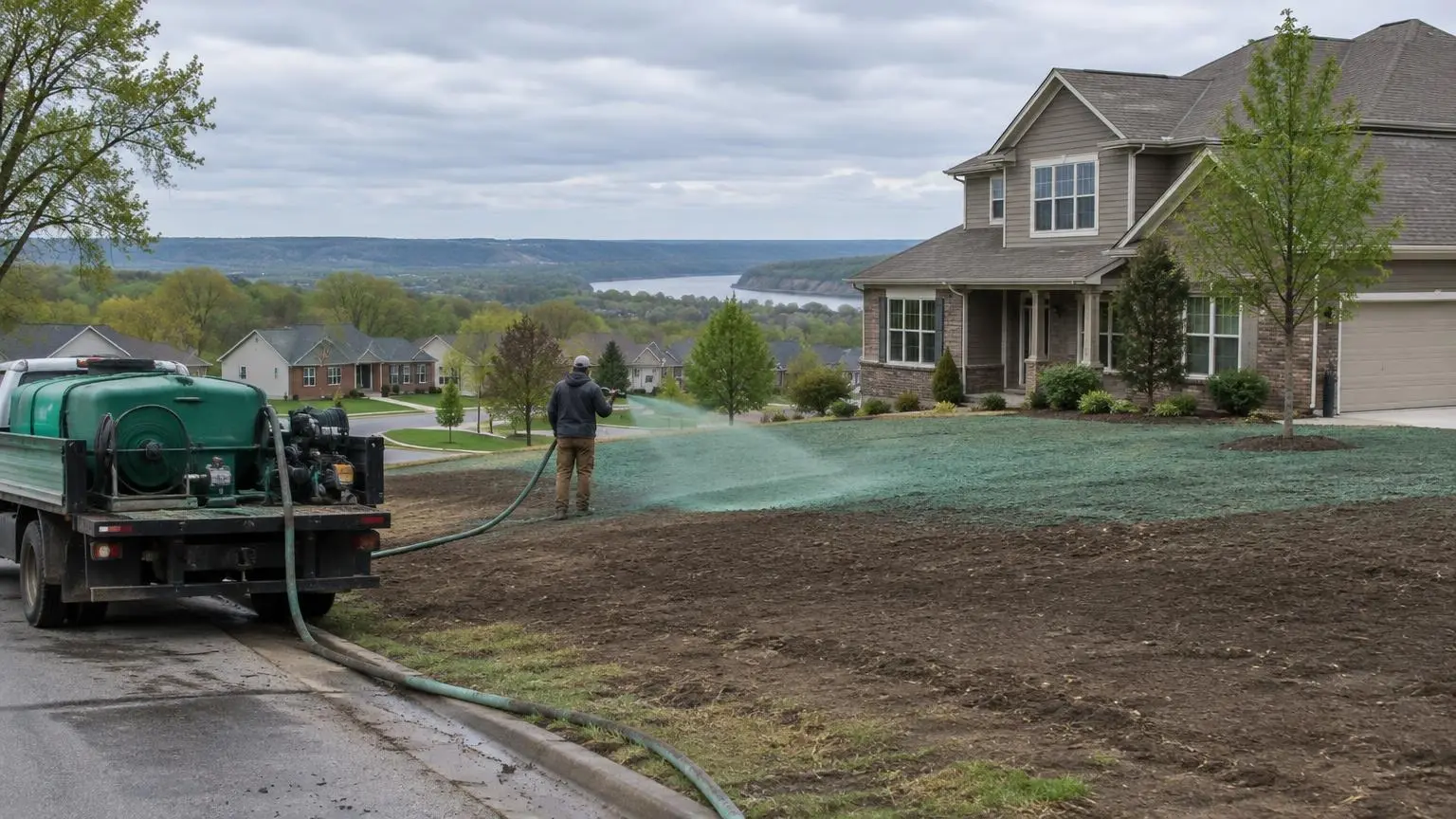
Perimeter controls that pass inspection
Silt Fence & Sediment Control in Kansas City, MO
Fence trenched in, inlets protected and the whole line kept up until the grass takes over.
- We walk your ground for free and quote it in writing
- Seed mixes chosen for Missouri's transition-zone weather
- Grading, seeding and erosion control from one crew
Keeping Mud on Your Site and Out of the Street
Silt fence and sediment control is the first thing on a Kansas City construction site and one of the last things off it. Before the first scoop of a basement dig, the downhill edges of the lot need a barrier that lets water pass slowly while catching the silt it carries, and every storm inlet nearby needs protection. We work as silt fence contractors for home builders, remodelers, site contractors and developers across the metro, and we pair that work with the hydroseeding that eventually lets the fence come out.
Why sediment control matters here
The City of Liberty's stormwater program states it plainly: sediment is a leading pollutant of urban streams, and local, state and federal rules require adequate erosion and sediment control. It also notes that local studies by the U.S. Geological Survey and Kansas City, Missouri found many pollutants in area streams above national standards. Under federal rules, a project needs stormwater permit coverage when it disturbs one acre or more or belongs to a bigger planned development, and that permit requires controls designed, installed and maintained to minimize pollutant discharge. Cities can add their own requirements: Liberty ties erosion and sediment control to its building and land disturbance permits and uses the KC APWA and MARC best management practices manual as its standard.
Silt fence installation done right
Most silt fence that fails was installed wrong. If the bottom edge of the fabric is only staked on top of the ground instead of buried in a trench, water runs right under it. Our silt fence installation follows the basics every inspector looks for:
- Fabric toed into a trench along the uphill side and backfilled and compacted
- Posts on the downhill side at proper spacing, driven firm
- Fence laid on the contour, with both ends bent uphill so water cannot flow around
- No fence across a concentrated flow channel, where it will blow out
- Wire or stabilized backing where the fence has to hold back more
On the silty loess soils common around Kansas City, fine sediment can blind the fabric quickly after a big rain, so placement and maintenance matter as much as installation.
Inlet protection and other controls
Storm inlets in the street and on site need protection to keep sediment out of the pipe system. Depending on the inlet and the traffic, we use fabric barriers, gravel and wire mesh, sandbags or manufactured inlet devices. We also install other sediment controls on your plan, such as filter socks where trenching for fence is not possible, and we can coordinate with your grading crew on rock construction entrances.
Maintenance through the job
A silt fence is only as good as its last inspection. Sediment builds up against it, posts get knocked over by equipment, and fabric tears. Kansas City averages over five inches of rain in both May and June, and a big storm can fill a fence in one afternoon. We offer maintenance visits to clean out sediment, re-trench sagging sections, replace torn fabric and reset inlet protection, so your site stays in shape between your own inspections.
Getting to final stabilization
Sediment controls are a temporary fix. The permanent one is vegetation. Once final grades are set, we hydroseed or blanket the disturbed areas and leave the fence in place until the grass is established and the site meets the stabilization requirements on your plan. Then we pull the fence, spread the trapped sediment, and seed the strip where the fence stood. Because the same crew handles fence, seed and removal, nothing gets missed between trades.
Who we work for
Our sediment control customers include custom and production home builders, commercial general contractors, utility and excavation contractors, and homeowners doing a major addition or pool where the city requires perimeter controls. Small jobs get the same attention as big ones; an inspector looks at 200 feet of fence as closely as 2,000.
Sediment Control Services
Perimeter and inlet controls from start of construction to removal.
Silt fence installation
Trenched, staked and backfilled fence along the downhill perimeter.
Wire-backed silt fence
Reinforced fence for longer slopes or heavier sediment loads.
Inlet protection
Fabric, gravel and mesh, sandbag or manufactured devices for curb and area inlets.
Filter socks
Sediment barriers for pavement and spots where fence cannot be trenched.
Maintenance visits
Cleanout, re-trenching, repairs and resets after storms.
Removal and final seeding
Fence pulled after stabilization and the strip seeded.
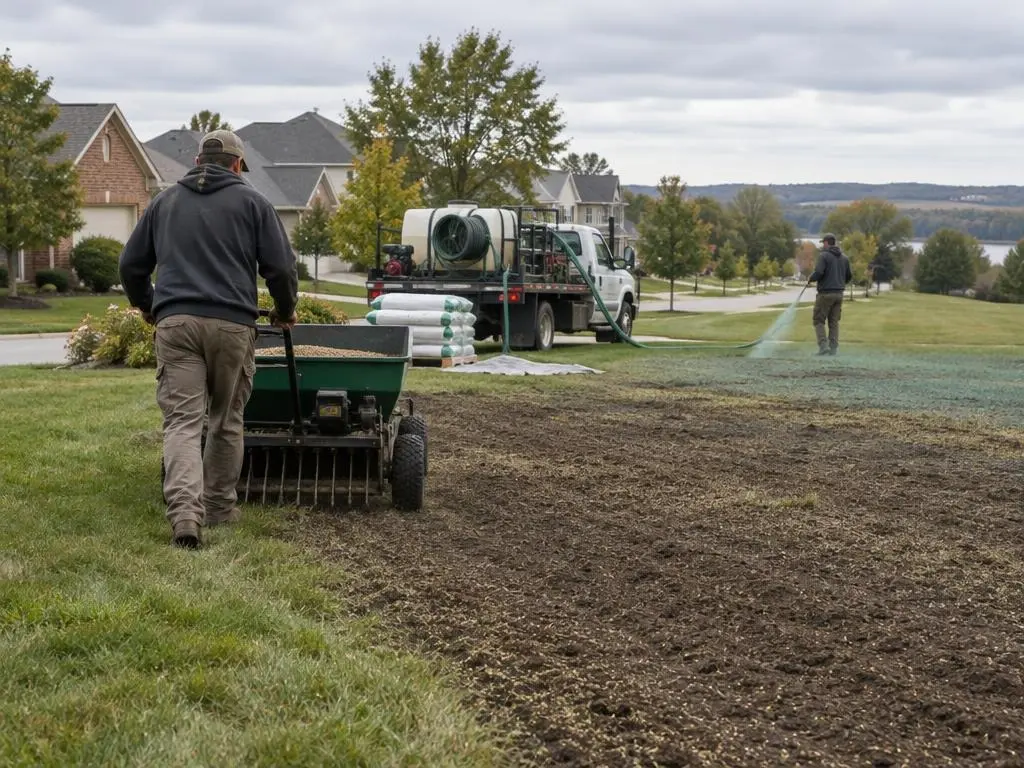
Sediment Control Cost Ranges
| Item | Rate (source) |
|---|---|
| Silt fence, unstabilized (2025 state DOT erosion-control rate schedule) | $378 per 100 ft |
| Silt fence, stabilized (2025 state DOT erosion-control rate schedule) | $748 per 100 ft |
| Inlet protection, silt fence barrier (2025 state DOT erosion-control rate schedule) | $102 each |
| Inlet protection, sandbag (2025 state DOT erosion-control rate schedule) | $141 each |
| Inlet protection, gravel and mesh (2025 state DOT erosion-control rate schedule) | $172 each |
These rates come from a 2025 public erosion-control rate schedule and are shown for scale only. Length, access, ground conditions and how often the controls need maintenance all affect cost. The written bid for your site is what we charge.
From Layout to Removal
1. Review the plan
We go over your stormwater plan or the city's requirements for the lot.
2. Lay out the line
Fence placed along the contour and inlets identified.
3. Install
Trench, fabric, posts and backfill; inlet protection set.
4. Maintain
Cleanouts and repairs after storms or on your schedule.
5. Stabilize and remove
Seed the site, pull the fence once grass is established and seed the fence line.

Why Choose Us for Silt Fence & Sediment Control
Trenched, every time
Fabric goes in the ground, not on top of it.
Fence to finish
The crew that sets your fence also seeds the site and pulls the fence.
Storm response
Maintenance visits after big rains keep your site in shape for inspection.
Silt Fence & Sediment Control Questions
Does my home addition need silt fence?
Many cities require perimeter controls on building permits that disturb soil. Your permit conditions or the building department will say. If it is required, we can install it before you dig.
On a Kansas City job site, how long should silt fence remain in place?
Until the disturbed area is stabilized, usually meaning grass is established to the standard on your plan. Then it comes out and the strip gets seeded.
Why does my silt fence keep falling over?
Usually because it was not trenched, the posts are too far apart, or it is across a channel where water concentrates. We fix the cause, not just the fabric.
Do silt fence contractors also handle inlet protection?
We do. Inlet protection is usually part of the same plan, and we install and maintain both.
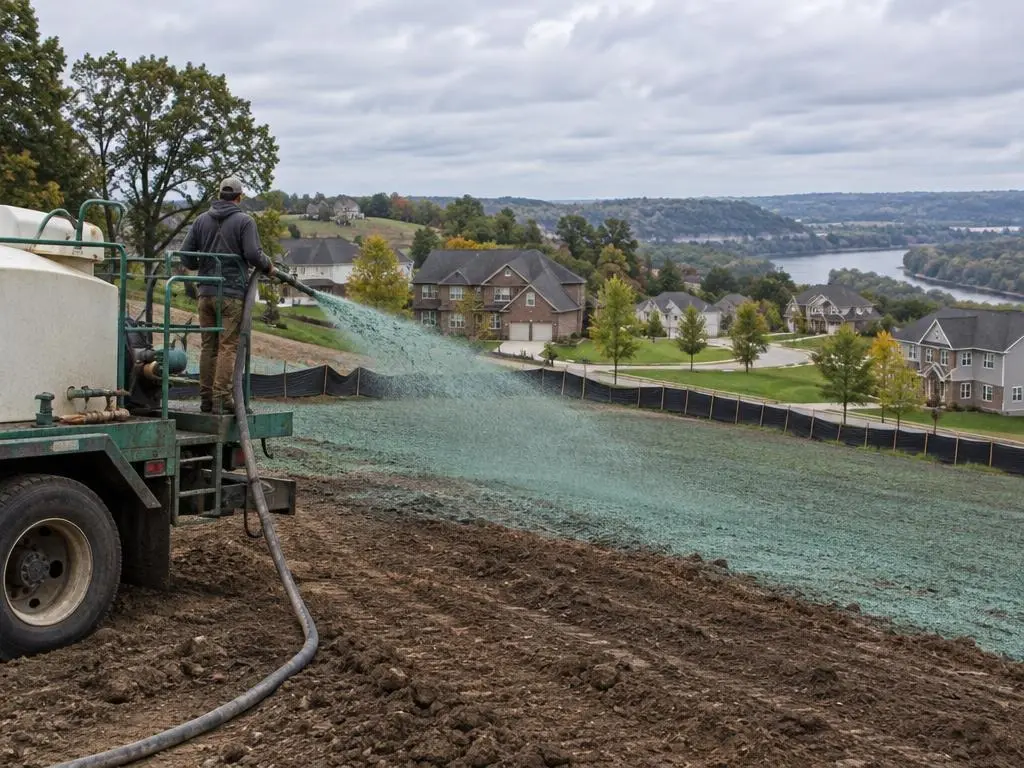
Silt Fence & Sediment Control Service Areas
- Hydroseeding in Kansas City, MO
- Hydroseeding in Overland Park, KS
- Hydroseeding in Olathe, KS
- Hydroseeding in Lee's Summit, MO
- Hydroseeding in Kansas City, KS
- Hydroseeding in Independence, MO
- Hydroseeding in Blue Springs, MO
- Hydroseeding in Shawnee, KS
- Hydroseeding in Lenexa, KS
- Hydroseeding in Liberty, MO
- Hydroseeding in Raymore, MO
- Hydroseeding in Gardner, KS
- Hydroseeding in Leawood, KS
- Hydroseeding in Belton, MO
- Hydroseeding in Grandview, MO
- Hydroseeding in Gladstone, MO
- Hydroseeding in Parkville, MO
- Hydroseeding in Smithville, MO
- Hydroseeding in Kearney, MO
- Hydroseeding in Grain Valley, MO
- Hydroseeding in Platte City, MO
- Hydroseeding in Riverside, MO
- Hydroseeding in Prairie Village, KS
- Hydroseeding in Bonner Springs, KS
Get a Silt Fence & Sediment Control Estimate
Need fence before you dig? Call (816) 666-9542.