
Stormwater taken seriously
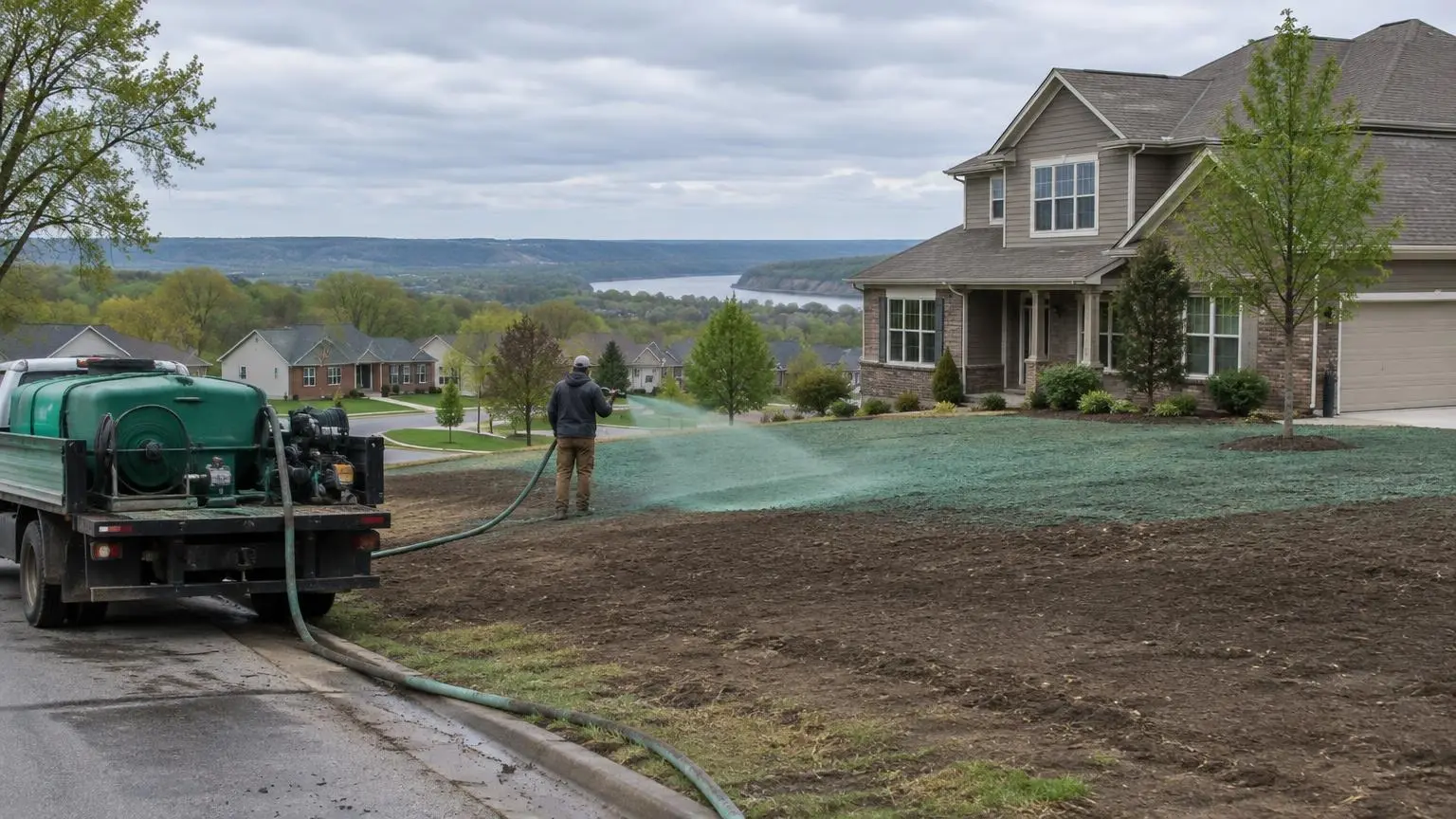
Hydroseeding in Lenexa, KS
Lenexa built a lake to hold its stormwater. Your site's sediment plan matters here.
- We walk your ground for free and quote it in writing
- Seed mixes chosen for Missouri's transition-zone weather
- Grading, seeding and erosion control from one crew
Seeding in a City Run on Stormwater Rules
Hydroseeding in Lenexa ties directly into the city's stormwater program. Lenexa calls its approach Rain to Recreation: it treats stream corridors as ecosystems, collects erosion and site development fees when land is disturbed, issues permits for construction sites and inspects them for compliance. For a builder or developer, fast, even vegetation is part of keeping a permitted site in good standing.
Sediment is the top pollutant
The city lists sediment first among its main surface water pollutants, ahead of bacteria, phosphorus and trash. Bare dirt on a construction lot is the main source. Our role is to hold it in place with silt fence along the downhill edge, inlet protection at the curb, and hydroseed or hydromulch on disturbed ground as soon as grading wraps up.
Lake Lenexa and Black Hoof Park
The 35-acre Lake Lenexa, in Black Hoof Park, is held back by a dam completed in 2006 and built from about 150,000 cubic yards of earth. It sits in the Mill Creek drainage and serves as a flood control reservoir. Yards and sites upstream feed it, which is one more reason to stabilize slopes quickly.
Many miles of pipe
The city maintains over 160 miles of storm pipe, nearly 9,000 inlets and 22 miles of streams. Soil washed off a lot ends up in those pipes and costs everyone money to clean out.
Homeowners too
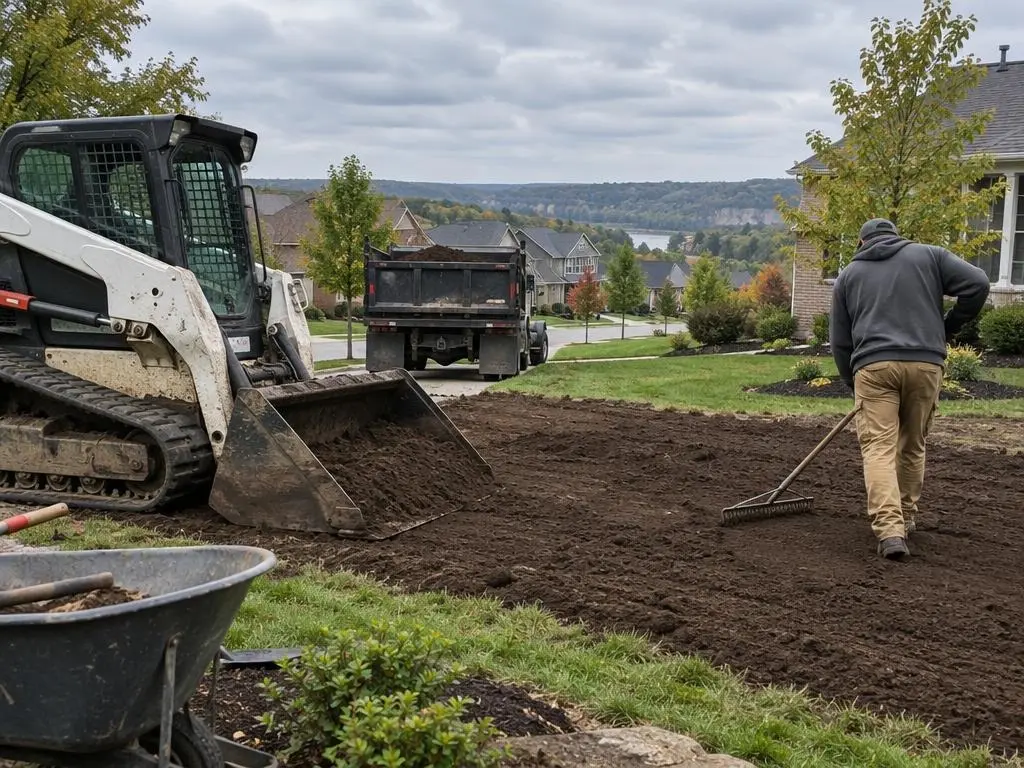
Lenexa grew 19.2 percent between 2010 and 2020, so plenty of homes are only a few years old. Builder-grade lawns here often need topsoil, fine grading and a proper new lawn installation. With about 37 inches of rain a year, a well-mulched hydroseed lawn roots faster than a thin dry-seeded one.
Get a free estimate or call (816) 666-9542.
Lenexa Stormwater Facts
- Erosion fees. Rain to Recreation is funded partly by erosion and site development fees assessed when land is disturbed.
- Sediment first. The city names sediment among its main surface water pollutants, along with bacteria, phosphorus and trash.
- Lake Lenexa. The 35-acre flood control lake in Black Hoof Park sits behind a dam completed in 2006.
- Storm system. Lenexa maintains more than 160 miles of pipe, nearly 9,000 inlets and 22 miles of streams.
Lenexa Questions
Does Lenexa inspect construction sites for erosion control?
Yes. The city issues permits for construction and development and inspects permitted job sites. Check with the city for the exact requirements on your project.
What do you install to keep sediment off the street?
Silt fence on the low side, inlet protection at nearby drains and fast seeding or hydromulch on bare ground.
Is hydroseeding enough for final stabilization?
On most gentle ground, yes, once the grass is established. Steep banks may need blanket or bonded fiber matrix too.
Can you fix a thin builder lawn on a newer Lenexa home?
Yes. We add topsoil where needed, fine grade and reseed.
Free Estimates in Lenexa, KS
Free estimates for Lenexa builders and homeowners.
Hydroseeding Near Lenexa
- Hydroseeding in Kansas City, MO
- Hydroseeding in Overland Park, KS
- Hydroseeding in Olathe, KS
- Hydroseeding in Lee's Summit, MO
- Hydroseeding in Kansas City, KS
- Hydroseeding in Independence, MO
- Hydroseeding in Blue Springs, MO
- Hydroseeding in Shawnee, KS
- Hydroseeding in Liberty, MO
- Hydroseeding in Raymore, MO
- Hydroseeding in Gardner, KS
- Hydroseeding in Leawood, KS
- Hydroseeding in Belton, MO
- Hydroseeding in Grandview, MO
- Hydroseeding in Gladstone, MO
- Hydroseeding in Parkville, MO
- Hydroseeding in Smithville, MO
- Hydroseeding in Kearney, MO
- Hydroseeding in Grain Valley, MO
- Hydroseeding in Platte City, MO
- Hydroseeding in Riverside, MO
- Hydroseeding in Prairie Village, KS
- Hydroseeding in Bonner Springs, KS